
Issue listing on Seller Central
Hello,
The company I work for formerly had a Vendor Central account back in the day (along with Brand Registry) that was basically delisted and pushed out by Amazon. The people managing the account couldn’t get any intel as to why this was but our product catalog disappeared as well and they no longer purchased product from us.
Fast forward to today – I am in charge of getting it started back up again on Seller Central (FBA). We have a few of our distributors who are already selling these products (but not all sizes).
Our Amazon representative (a Business Development Manager for Emerging Brands) said that in order to list the exact same product and be able to effectively ‘take back’ our brand registry, we’d need to list these products and then contact support to link the former brand registry to this new account and the way to do that was click “Sell this Product” rather than “Copy this Product”.
So I did this, and when asked to enter the SKU, I put our company’s SKU (which is also listed on the product page) and I get the error:
“SKU being entered is already being used in your catalog. Please check your catalog across all stores or enter a different SKU to try again”
So I check our stores – US, Canada, Mexico – nothing there. I signed back into our Vendor Central account which is a shell of an account (dashboard is empty, catalog is empty, no products listed or anything to update) and don’t see it there.
Any ideas on why I would get this blocking message given that I don’t see it in a catalog anywhere?
submitted by /u/3mjaytee
[link] [comments]
Issue listing on Seller Central
Hello,
The company I work for formerly had a Vendor Central account back in the day (along with Brand Registry) that was basically delisted and pushed out by Amazon. The people managing the account couldn’t get any intel as to why this was but our product catalog disappeared as well and they no longer purchased product from us.
Fast forward to today – I am in charge of getting it started back up again on Seller Central (FBA). We have a few of our distributors who are already selling these products (but not all sizes).
Our Amazon representative (a Business Development Manager for Emerging Brands) said that in order to list the exact same product and be able to effectively ‘take back’ our brand registry, we’d need to list these products and then contact support to link the former brand registry to this new account and the way to do that was click “Sell this Product” rather than “Copy this Product”.
So I did this, and when asked to enter the SKU, I put our company’s SKU (which is also listed on the product page) and I get the error:
“SKU being entered is already being used in your catalog. Please check your catalog across all stores or enter a different SKU to try again”
So I check our stores – US, Canada, Mexico – nothing there. I signed back into our Vendor Central account which is a shell of an account (dashboard is empty, catalog is empty, no products listed or anything to update) and don’t see it there.
Any ideas on why I would get this blocking message given that I don’t see it in a catalog anywhere?
submitted by /u/3mjaytee
[link] [comments]
what do you guys use for accounting?
I’m a small seller and it’s really hard to keep track of expenses and profit
need some suggestions how do you do your accounting
submitted by /u/4bhii
[link] [comments]
what do you guys use for accounting?
I’m a small seller and it’s really hard to keep track of expenses and profit
need some suggestions how do you do your accounting
submitted by /u/4bhii
[link] [comments]
How to Handle a Counterfeit Claim on Amazon (and Safeguard Your Seller Account in 2026)
 A Seller’s Nightmare: When One Sale Shuts Down Everything
Every Amazon seller risks facing a counterfeit claim — even when the product is completely genuine. In a real seller case, a legitimate Super Nintendo game was accidentally listed under a bootleg ASIN. The buyer assumed the item was counterfeit and reported it, and when Amazon requested invoices and brand authorization, the seller couldn’t provide them. After Amazon’s standard 30-day review window, their account was deactivated over a single $35 sale.
It’s a reminder that many counterfeit claims aren’t about fake products at all, but about ASIN mismatches, outdated catalog entries, and missing documentation. Here’s what sellers need to know to avoid the same situation — and how to respond if it happens.
Quick Summary
Counterfeit claims are one of the fastest ways to get your Amazon account suspended — even if your products are genuine.
Here’s what to know and how to fight back:
- Always source from authorized suppliers or distributors — and keep every invoice.
- If hit with a counterfeit claim, respond within 72 hours with clear documentation.
- Never list under unverified or bootleg ASINs — check brand gating every time.
- Use tools like Seller Labs Profit Genius to monitor SKU-level profitability and performance trends and keep documentation organized so you can respond quickly if Amazon requests authenticity information.
What Counts as a Counterfeit Claim on Amazon
Amazon defines counterfeit as “a product that’s falsely branded or represented as authentic.”
That includes:
- Listing genuine inventory under the wrong ASIN (often with an unauthorized brand name).
- Using product photos or descriptions from another brand without authorization.
- Sourcing inventory from unverified third-party wholesalers or liquidators.
Even one complaint can lead to a Policy Warning, a Listing Removal, or — if documentation isn’t airtight — a full account suspension.
Step-by-Step: How to Respond to a Counterfeit Claim
If Amazon flags your listing or account for counterfeit activity, you’ll typically receive a Performance Notification in Seller Central.
1. Gather Your Documentation Fast
Provide:
- Supplier invoices (from the last 365 days) showing product authenticity.
- Authorization letters from the brand or distributor, if required.
- Tracking or fulfillment proof (to show product origin and chain of custody).
 Tip: Even if you’re a reseller of used or vintage items, include your sourcing path (thrift store, estate lot, etc.) and note why manufacturer invoices may not exist. Transparency beats silence.
2. Write a Clear, Professional Appeal
Use Amazon’s “Appeal” button in Account Health to submit:
- A short, factual explanation of what happened.
- Proof of authenticity and a written plan of action explaining what changes you’ve made to prevent future violations.
Structure matters:
- What happened: One ASIN incorrectly listed under a third-party brand.
- Why it happened: Human error in product matching.
- What you did: Removed listing, verified brand gating rules, and retrained on ASIN selection.
- What you’ll do next: Only list verified ASINs from authorized sources.
Keep it simple, factual, and respectful — no emotion, no blame.
3. Avoid These Common Appeal Mistakes
 Submitting generic “I didn’t do it” responses. Uploading receipts instead of invoices. Leaving the issue unaddressed for more than 72 hours. Repeatedly relisting the flagged product (instant ban risk).
Amazon’s compliance system rewards clarity and accountability. Sellers who show a corrective process often get reinstated faster — even without major brand connections.
How to Prevent Future Counterfeit Flags
Once your account is reinstated (or if you want to avoid this altogether), build a seller protection checklist like the pros do:
1. Source Smart
Buy only from:
- Authorized brand distributors
- Verified liquidation partners (via Amazon’s Transparency Program or GS1-certified sources)
Keep digital copies of invoices for every shipment for at least two years.
2. Verify Every ASIN
Before listing, check:
- The brand field (no generic or bootleg brand names)
- “Used” categories — many older ASINs are fan-generated and not brand-safe
- Brand gating status: if you’re not approved for that brand, don’t list under it
3. Track Listing Health
Use tools like Seller Labs Profit Genius to:
- Track SKU-level performance changes
- Identify unusual dips tied to suppressed listings
- Organize SKU documentation for faster appeal responses
Important Note: Profit Genius does not prevent suspensions or detect counterfeit products. It assists with monitoring and documentation management, helping sellers act faster if Amazon requests verification.
4. Build a “Counterfeit Response Kit”
Have these ready before you ever need them:
- Invoices (PDFs with supplier name, address, and SKU)
- Brand approval emails or letters
- PO history
- Return records
Top sellers automate this — and it can save your account in hours instead of weeks.
Real-World Seller Insights
Experienced Amazon sellers and industry data suggest:
- About 80 percent of counterfeit flags result from listing mismatches, not fake items
- Sellers who provide invoices plus a corrective action plan see three times higher reinstatement rates
- Sellers who check account health weekly experience 40 percent fewer compliance issues
 Sources:
- Amazon Brand Protection Report 2024
- Marketplace Pulse — Amazon Seller Growth Data 2024
- TraceFuse — Amazon Seller Performance Metrics 2024
Final Takeaway: Protect Your Profit, Not Just Your Products
Counterfeit claims can happen to any seller — even honest ones.
But the sellers who survive and scale are those who:
- Stay proactive with documentation.
- Understand Amazon’s compliance expectations.
- Use data tools to detect problems before they become suspensions.
In short — don’t wait for the email that says, “Your account has been deactivated.” Build systems now that make your business Amazon-proof.
 Next Step
Sign up for the Seller Labs Profit Genius free trial and connect your listing, advertising, and profitability data in one place. Centralize your SKU documentation, track performance trends, and stay organized so you can respond quickly if Amazon ever requests authenticity or compliance information.
Ready to safeguard your Amazon account and stay ahead of compliance challenges?
Turn Amazon’s listing and account-health insights into proactive protection with Seller Labs.
For a limited time, get 30% off your first month — after your 30-day free trial.
Related Blogs
- Low Inventory Level Fees: Do You Know How Much Amazon Is Charging You?
Learn how Amazon calculates its 2025 low inventory fees and how to minimize unnecessary charges. - Master Amazon Inventory Like a Pro in 2025 With Seller Labs
Discover data-driven strategies for inventory planning, demand forecasting, and restock optimization. - Amazon 2025 Fee Changes: How They Affect Sellers
A complete breakdown of Amazon’s 2025 fee increases, reductions, and structural changes. - Amazon Buyer-Seller Messaging Suspension: How to Address & Prevent It
Understand what triggers messaging suspensions and how to safeguard your account health. - Amazon SEO: How to Optimize Your Product Listings for Higher Rankings & Sales
Boost visibility and sales by optimizing your Amazon listing titles, bullets, images, and keywords.
The post How to Handle a Counterfeit Claim on Amazon (and Safeguard Your Seller Account in 2026) appeared first on Seller Labs: Amazon Seller Software and Platform.
What is an Amazon Referral Fee and How it Affects Your Profit Margins?

Every time you make a sale on Amazon, the platform charges what’s known as a referral fee; a commission Amazon collects for hosting your products and processing your sales. But, what is an Amazon referral fee?
Knowing what an Amazon referral fee is and how it’s calculated is essential for accurately estimating your costs and protecting your profit margins.
Overview
What Is an Amazon Referral Fee?
An Amazon referral fee is basically Amazon’s commission for helping you sell a product in their marketplace. Every time you make a sale, Amazon charges a percentage of the total sale amount.
The referral fee percentage also varies depending on your product category. On average, sellers can expect to pay between 6% to 45%, with most categories landing around 15%.
To help you plan your costs, we’ve summarized the most popular Amazon seller categories and their current referral fee rates below. This quick-reference chart is based on the latest data from Amazon Seller Central and reflects the standard U.S. marketplace fee structure.
Amazon Referral Fee Rates by Category
| Category | Referral Fee % | Applicable Minimum Referral Fee |
|---|---|---|
| Home & Kitchen | 15% | $0.30 |
| Beauty, Health & Personal Care |
|
$0.30 |
| Clothing & Accessories |
|
$0.30 |
| Consumer Electronics | 8% | $0.30 |
| Baby Products |
|
$0.30 |
| Toys & Games | 15% | $0.30 |
| Sports & Outdoors | 15% | $0.30 |
| Pet Products | 15%, except 22% for veterinary diets | $0.30 |
| Computers | 8% | $0.30 |
| Automotive & Powersports | 12% | $0.30 |
| Furniture |
|
$0.30 |
| Fine Art |
|
N/A |
How Are Amazon Referral Fees Calculated?
Amazon referral fees follow a straightforward formula, and understanding the components makes it easier to estimate your costs. For every item you sell, Amazon charges either a percentage of the total sales price or a minimum referral fee, whichever amount is higher.
(Item price + delivery charges + gift-wrap charges) × Category Referral Rate
OR the applicable minimum referral fee, whichever amount is greater.
Below is a breakdown of what goes into this calculation.
1. Total Sales Price
Amazon calculates the referral fee based on the total sales price, which includes:
- Item price, which is the product’s listed selling price
- Delivery charges, if you charge shipping while fulfilling the order yourself
- Gift wrap charges, if the buyer chooses gift wrapping
Taxes collected through Amazon’s tax calculation services are not included.
Item price: $25.00
Delivery charges: $4.50
Gift-wrap charges: $3.50
Total sales price = ($25.00 + $4.50 + $3.50) = $33.00
2. Category Referral Fee Rate
Each category has a specific referral fee percentage. Amazon applies this rate to the total sales price when the order ships.
A Home & Kitchen item with a total sales price of $33.00 has a 15% referral rate.
Referral fee = ($33.00 × 15%) = $4.95
3. Minimum Referral Fee
Most categories have a fixed minimum referral fee. If the percentage-based fee is lower than the minimum, Amazon will charge the minimum amount instead.
Total sales price: $1.00
Referral rate: 15%
Minimum referral fee: $0.30
Percentage-based fee = $1.00 × 15% = $0.15
Referral fee charged = $0.30 because $0.15 < $0.30
The Three Ways Amazon Calculates Referral Fees by Category
Some Amazon categories use different referral fee percentages, and these fees are always based on the total sales price. Depending on the category, Amazon uses one of three main fee structures: flat rate and tiered rates with different thresholds (single threshold and progressive threshold).
1. Flat Rate Categories
Flat rate categories are the simplest. The referral fee percentage stays the same no matter what the product costs.
The Home & Kitchen category charges a flat 15% referral fee with a $0.30 minimum per item.
Whether your water bottle sells for $50 or $500, the same percentage applies.
2. Tiered Rate: Single Threshold
In this structure, Amazon uses one price breakpoint (threshold) to determine the fee. Once the total sales price passes that threshold, the entire price is charged at a different rate.
In Beauty, Health & Personal Care, Amazon charges:
- 8% for products priced $10.00 or less
- 15% for products priced above $10.00
How it works:
For an $8 item: $8 × 8% = $0.64
For a $12 item: $12 × 15% = $1.80
3. Tiered Rate: Progressive Threshold
Some categories use a progressive, portion-by-portion fee, similar to how income tax brackets work. Different parts of the price are charged at different percentages.
In Furniture, Amazon charges:
- 15% on the portion of the price up to $200
- 10% on the portion above $200
If the item sells for $500:
First $200 → $200 × 15% = $30
Remaining $300 → $300 × 10% = $30
Total referral fee = $60
Does Amazon Refund Referral Fees?
Yes, if you refund a customer’s order, Amazon will also refund you the referral fee you originally paid, minus a small refund administration fee.
When you issue a refund, Amazon credits you back the referral fee based on the portion of the order you refunded.
Amazon then deducts a refund administration fee, which is the lesser of $5 or 20% of the original referral fee.
This refund process happens at the time the refund is created in your Seller Central account.
How Amazon Refunds Referral Fees
Minimum $5.00 OR 20% × original referral fee (whichever is lesser)
For instance, you sell a kitchen blender that falls under the Home & Kitchen category.
| Details | Amount |
|---|---|
| Item price | $60.00 |
| Shipping | $5.00 |
| Gift wrap | $2.00 |
| Total (for fee) | $67.00 |
The referral fee rate is 15%, which comes out to $10.05 (15% × $67).
Now, let’s say the buyer cancels and you issue a full refund. In that case, Amazon gives back most of your referral fee but keeps a small portion as a refund administration fee.
That fee is 20% of the original referral fee, or $2.01 in this example, well under Amazon’s $5 threshold.
So in the end, you’ll get back $8.04 of your referral fee ($10.05 − $2.01).
How to Find the Amazon Referral Fee for a Product in Seller Central
You can find referral fee information for each of your listings directly on Amazon Seller Central under the “Fees” section of your product detail page. However, this process can take time, especially if you sell in multiple categories.
Simply follow these steps:
- Go to Manage Inventory in your Amazon Seller Central account.
- In the Search box, type your product’s SKU or ASIN and hit Enter.
- Find your product in the list and look for the Estimated fees per unit sold column.
- Click the value shown in that column.
- In the pop-up window, click the info icon next to Referral fee; you’ll see the fee category and the percentage Amazon charges for that product.
BQool’s Amazon Referral Fee Calculator
If you want a faster way to estimate your referral fees without logging into Seller Central, try our Amazon Referral Fee Calculator below. This calculator uses the same fee percentages published by Amazon Seller Central. It’s a quick way to understand your costs before listing or pricing a product.
BQool’s Amazon Referral Fee Calculator
Show how this was calculated.
Amazon Seller Central Referral Fees.
Always verify the latest rates in Seller Central.
Why Amazon Referral Fees Matter for Your Profit Margins
Referral fees directly influence how much profit you keep per sale.
Below is an example of a fee change and the total price of a product as an example.
| Item Price | Referral Fee % | Fee Amount | Profit Impact |
|---|---|---|---|
| $10.00 | 8% | $0.80 | Higher profit |
| $10.01 | 15% | $1.50 | Lower profit |
That one-cent increase bumped the referral fee from 8% to 15%, cutting profit by nearly double.
In addition, referral fees stack up alongside FBA fees, storage fees, and shipping costs, which means you need to account for all these charges to understand your true margins.
Smart Strategies to Manage and Minimize Referral Fees
You can’t avoid referral fees entirely, but you can manage them wisely to protect your profits. Here’s how:
- Choose product categories strategically: Some products can be listed under multiple categories with different fee rates. Always compare before finalizing your listing.
- Bundle products: Product bundles can help spread referral fees across multiple items, improving your overall profit ratio. Although, bear in mind Amazon’s product bundling policy and make sure you adhere to Amazon’s fair pricing policy when bundling products.
- Monitor Amazon’s updates: Amazon occasionally revises its fee structure; keeping up with these changes prevents surprises.
- Price smartly & use advanced repricing tools: Tools like BQool’s AI Repricer automatically factor in referral and fulfillment fees, helping you price intelligently to stay in lower fee brackets.
How BQool’s AI Repricer Helps You Minimize Referral Fees and Maximize Profit Margins
Feature #1: Avoid Reduced Profit Range Feature
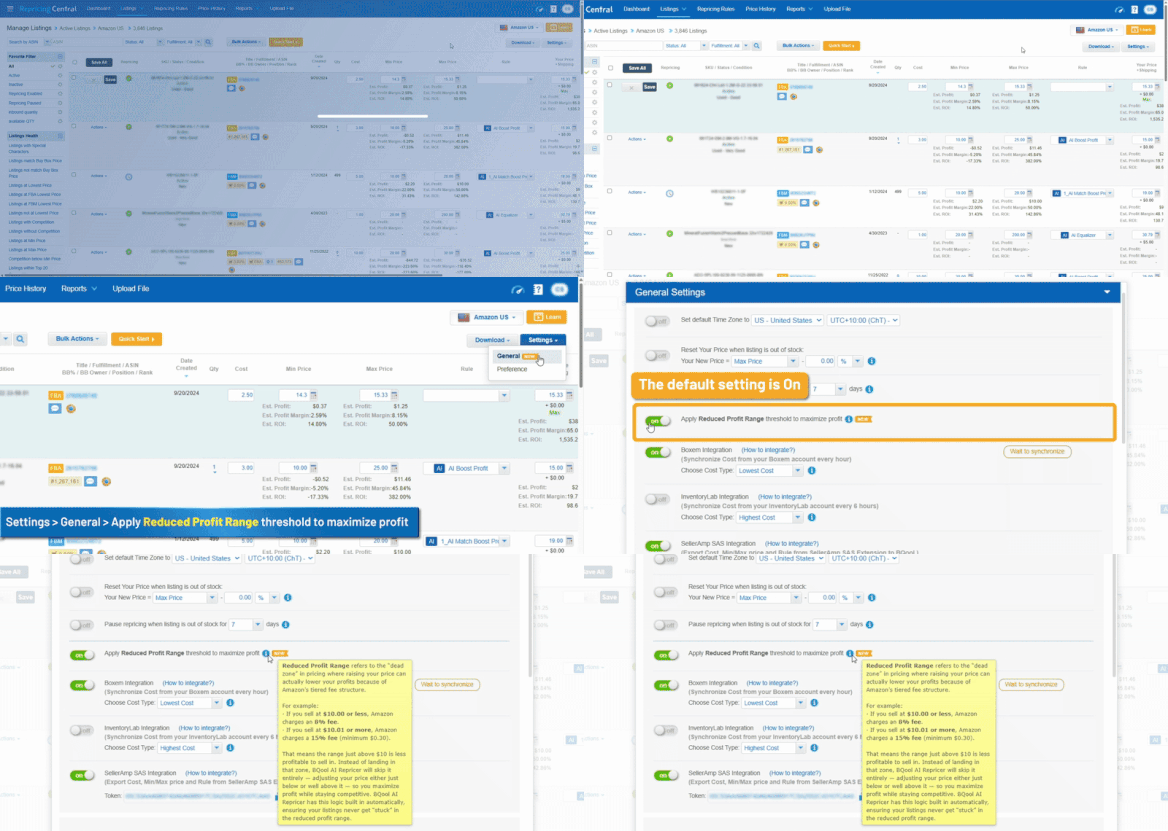
Amazon’s referral fees can shift significantly when your price crosses certain thresholds, for example, moving from an 8% fee bracket to a 15% one. Even a few cents can make a big difference.
Let’s say you’re selling an item priced around $10:
At $10.01, you’re charged a 15% referral fee, leaving you with $8.51 profit.
At $10.00, the fee drops to 8%, and your profit jumps to $9.20.
Skilled sellers focus on increasing profit, not just raising the Buy Box price. BQool’s AI Repricer helps by automatically detecting fee thresholds and adjusting your price strategically. This allows your Buy Box price to rise consistently while avoiding the lower-profit ranges that can reduce your margins.
Key benefits:
- Protects your profit margins by avoiding reduced profit ranges automatically
- Works by default with AI-powered repricing rules
- Already using BQool? Learn how to enable the Reduced Profit Range setting.
Feature #2: BQool’s Instant Profit Analyzer
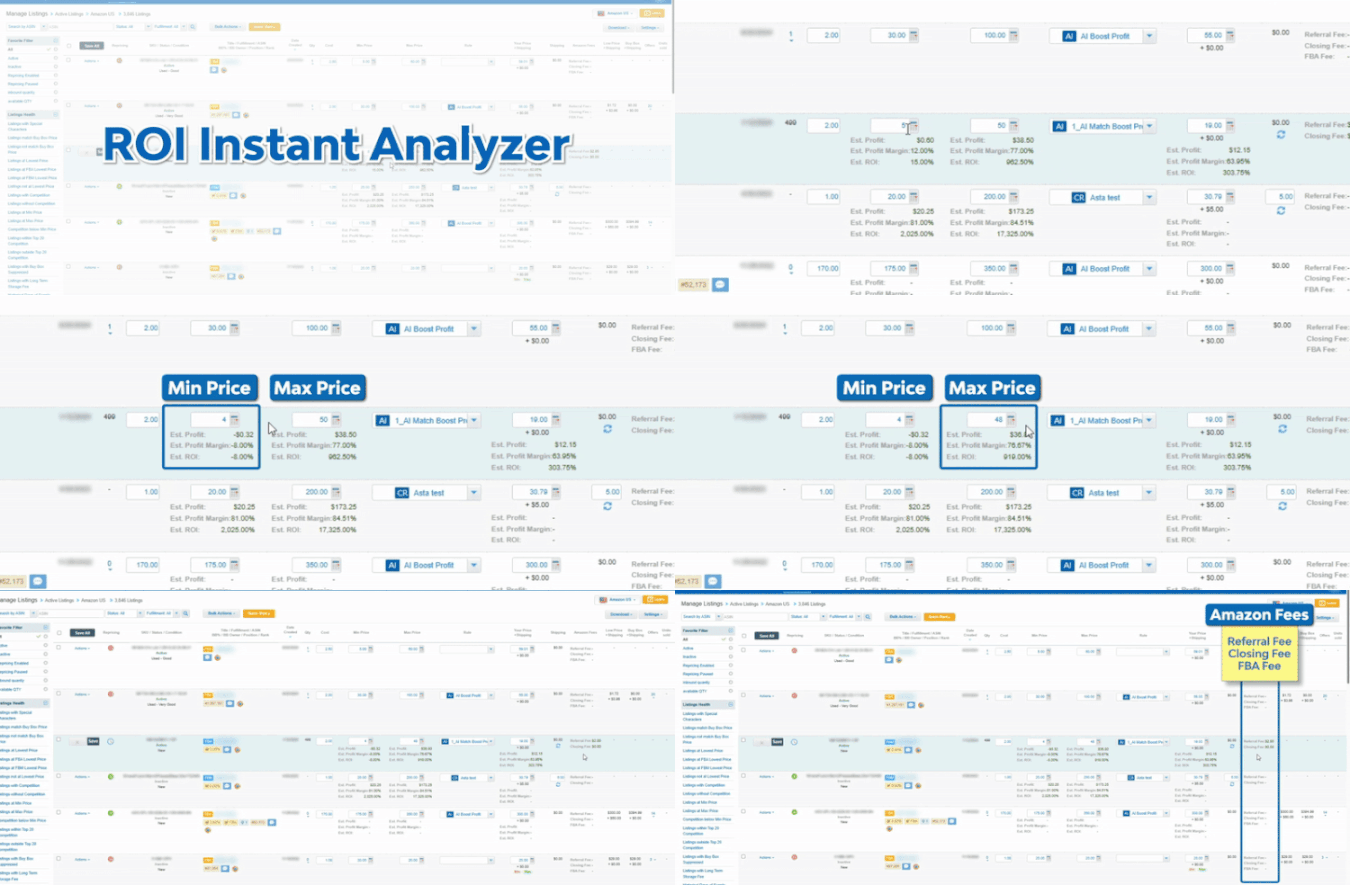
This feature helps you see your profits before you commit to a price change. For BQool users, navigate to your Repricing Central Active Listings tab, and instantly view ROI and profit margins for each ASIN, automatically updated as your price changes.
Key benefits:
- Instantly view ROI and profit for min/max prices
- Quick access to Amazon fee breakdowns
- If you’d like to see a video tutorial of this feature, check out this video.
FAQs
What is an Amazon referral fee?
It’s the commission that Amazon charges sellers for each sale and can vary from 6–45% of the total sales price.
How are Amazon referral fees calculated?
They’re based on the total sale amount (product + shipping + gift wrap) multiplied by the category-specific percentage.
Do referral fees differ between FBA and FBM sellers?
The referral fee percentage is the same, but total costs may differ due to fulfillment and storage fees.
Can referral fees change by category?
Yes, Amazon updates its category fee structure periodically, so always check the current rate.
How can sellers reduce referral fees?
Price smartly around fee thresholds, bundle products, and use AI-repricing tools like BQool to stay optimized automatically.
Conclusion
Understanding Amazon referral fees is essential for maintaining healthy profit margins. While fees are part of doing business on Amazon, smart pricing and automation can help you control their impact.
With tools like BQool’s AI Repricer, you can automatically manage referral fees, protect your profits, and price confidently in 9 key marketplaces.
The post What is an Amazon Referral Fee and How it Affects Your Profit Margins? appeared first on BQool Blog.
Renewed Sellers Crackdown?
Just got a big hit from Amazon regarding my renewed program account (over qc feedback) – In a way that was totally unexpected… Have any other sellers had this happen in the last month or so?
submitted by /u/JackSokool
[link] [comments]
Renewed Sellers Crackdown?
Just got a big hit from Amazon regarding my renewed program account (over qc feedback) – In a way that was totally unexpected… Have any other sellers had this happen in the last month or so?
submitted by /u/JackSokool
[link] [comments]
“Amazon vendor return – overstock”
I sell crochet grips on amazon through FBA. I recently received two full boxes of grips to my house, 500 in total. I did not receive any word before about these being shipped to me. That would be fine but I just looked at my account and realized they charged me FBA fees totaling over $900. I can’t afford to pay this, I don’t even make $900 / month in sales. Do I have any leg to stand on or did I screw something up? Has anyone else dealt with this?
submitted by /u/Proud-Performer8052
[link] [comments]
“Amazon vendor return – overstock”
I sell crochet grips on amazon through FBA. I recently received two full boxes of grips to my house, 500 in total. I did not receive any word before about these being shipped to me. That would be fine but I just looked at my account and realized they charged me FBA fees totaling over $900. I can’t afford to pay this, I don’t even make $900 / month in sales. Do I have any leg to stand on or did I screw something up? Has anyone else dealt with this?
submitted by /u/Proud-Performer8052
[link] [comments]

