
What Is Amazon Rufus? How to Optimize for AI Search
The game has changed on Amazon. Shoppers aren’t simply typing “protein powder” in the search bar anymore.
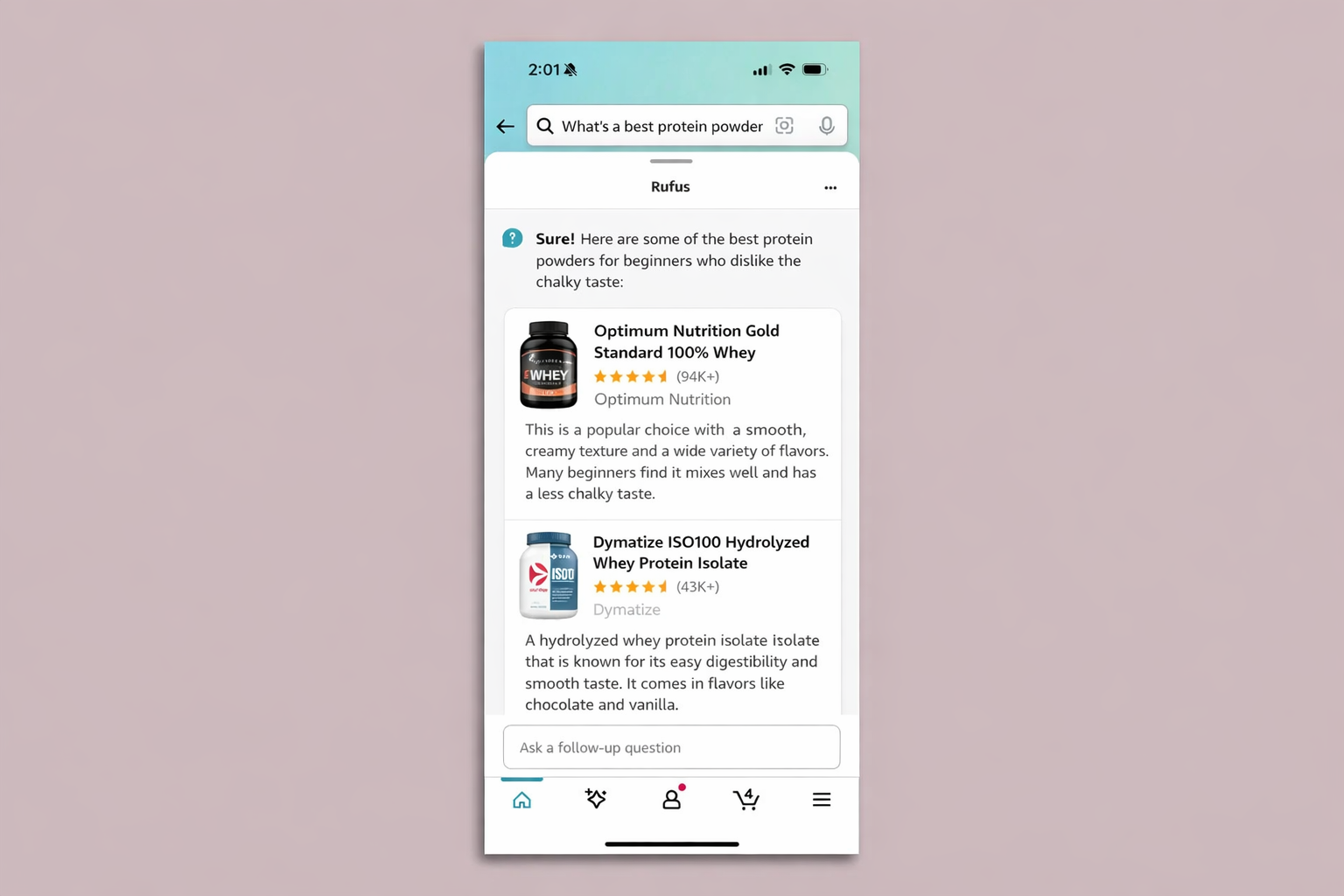
Instead, they’re asking Rufus,
“What’s the best protein powder for beginners who hate the chalky taste?”
And if your listing can’t answer that question better than your competitors, it likely won’t be recommended.
Winning the Buy Box used to be the holy grail of Amazon selling. Now, you need to win the AI recommendation, and that requires a different strategy.
This guide breaks down what changed, why it matters, and how to adapt to your listings, reviews, and ad strategy.
Overview
- What Is Amazon Rufus?
- How Rufus Has Impacted Businesses Selling on Amazon
- Faster, Shorter Sales Funnels
- The Challenge for Sellers
- How Amazon Search Worked Before Rufus
- How Rufus Impacts Product Discovery on Amazon
- How Does Rufus Work?
- Does Traditional Amazon SEO Still Matter?
- How to Optimize Listings for Rufus
- Add Maximum Context
- Describe Pain Points and Motivations
- State Experience Level
- Set a Pricing Strategy
- Lifestyle Scenarios and Real-Life Situations
- Visual Storytelling
- Start Optimizing Today
- How to Leverage Customer Reviews to Drive Rufus Recommendations
- Ready to Win the AI Search Game?
- Dynamic Pricing for Amazon Rufus
- FAQs
What Is Amazon Rufus?
Rufus is Amazon’s conversational AI shopping assistant that was launched in February 2024, and it’s changing how millions of shoppers discover products. Instead of scrolling through pages of search results, customers are having conversations with AI. They’re asking nuanced questions, stating their needs and challenges, and getting personalized recommendations in seconds.
How Rufus Has Impacted Businesses Selling on Amazon
Faster, Shorter Sales Funnels
Rufus is changing the amazon shopping journey by reducing friction at every stage. Before, shoppers were required to move through multiple steps including broad keyword searches, category browsing, filtering results, opening multiple tabs, and manually comparing products before deciding on a purchase.
According to Amazon, Rufus has been used by 250 million shoppers this year, with monthly active users up 140% year over year, interactions up 210%, and customers who engage with the assistant being 60% more likely to complete a purchase, helping drive an expected $10+ billion in annual incremental sales.
Now, this process is transformed into a conversation. Shoppers state their preferences upfront (price range, use cases, care requirements) and receive a tailored shortlist in seconds. Instead of browsing dozens of products, they focus on a few highly relevant options.
The Challenge for Sellers
With shorter funnels, you have fewer chances to capture attention. If your product doesn’t appear in Rufus’s first few responses, it may not be considered at all. Success shifts from earning broad visibility to being relevant for specific buyer intents.
How Amazon Search Worked Before Rufus
Before the integration of AI tools like Rufus, Amazon search relied on keywords and filters. Shoppers typed specific terms, and Amazon presented a ranked list based on relevance and performance.
Key limitations:
- Everyone saw the same ranking for the same keyword
- Complex or vague shopper needs were hard to address
- Discovery required manual browsing and comparison
- New shoppers struggled to find the right products
How Rufus Impacts Product Discovery on Amazon
Rufus understands natural language queries. Instead of searching for a “wireless keyboard,” shoppers now ask “What’s a quiet keyboard for late-night work?” or “Best ergonomic keyboard under $50?”
Rufus analyzes these conversational questions and recommends products based on intent, context, and individual shopper behavior, not just keyword matches. It personalizes results using browsing history, past purchases, and inferred needs. Therefore, product discovery on Amazon becomes more guided and contextual.
What this means for you:
- Recommendations are tailored to individual needs
- Visibility varies by audience, not just search term
- Products succeed by fitting specific use cases, not just ranking well
How Does Rufus Work?
- Trained on Amazon data: Rufus learns from Amazon product listings, customer reviews, and Q&A, not the open internet, so it understands real shopping behavior on Amazon.
- Understands intent, not just keywords: Instead of matching search terms, Rufus interprets what the shopper is trying to solve (use case, preferences, experience level, budget).
- Pulls real product facts before answering: Before making a product recommendation, Rufus looks up real, up-to-date information from Amazon’s product catalog and customer reviews.
- Personalizes recommendations: It factors in browsing history, past purchases, and context to tailor results for each shopper.
- Improves over time: Rufus learns from shopper interactions and feedback, getting better at recommending products that truly convert.
In short, Rufus improves Amazon search by focusing on shopper intent, not just keywords. Products that clearly explain who they’re for and how they’re used are more likely to be recommended, not just shown.
This leads us to the next question: does traditional Amazon SEO still matter?
Does Traditional Amazon SEO Still Matter?
Yes. SEO remains foundational. Keywords establish baseline relevance. Categories, attributes, and backend fields are critical for product retrieval. Without solid SEO, Rufus never gets the chance to recommend your listing to shoppers.
Once your listing is discoverable, the next challenge is making sure Rufus understands and can confidently explain your product.
How to Optimize Listings for Rufus
Think about how your customer talks to Rufus. Write your listing content to directly answer the questions your target personas would ask in a chatroom conversation with Rufus. Consider what they would type when seeking your product.
The best listings clearly communicate:
- What the product does
- Who it’s designed for
- When and why to use it
Add Maximum Context
Your listing should provide a comprehensive context that helps Rufus understand your product deeply. Write listings that answer common customer questions. Focus bullet points, descriptions, and A+ content on benefits, use cases, and real-world scenarios instead of just features.
Describe Pain Points and Motivations
Address the specific problems your product solves and why customers are motivated to buy. What frustrations does it eliminate? What goals does it help achieve?
State Experience Level
Specify whether your product is designed for beginners, intermediate users, or experts. This helps Rufus match your product to the right shoppers.
Set a Pricing Strategy
Consider your target audience’s budget and price reasonably. Remember that Rufus may present different price options to shoppers, so your pricing strategy becomes critical. Being competitively positioned within your category and clearly communicating value at your price point helps Rufus recommend you confidently.
Lifestyle Scenarios and Real-Life Situations
Include specific contexts where your product would be used. Instead of just listing features, paint pictures:
- “Perfect for morning commutes and travel”
- “Ideal for small apartments with limited counter space”
- “Designed for outdoor family gatherings”
Visual Storytelling
Your product photos should reflect these lifestyle scenarios. Show the product in actual use cases that your target personas can relate to, not just white-background shots.
Start Optimizing Today
Here are three actions you can take right now:
- Audit your top listings: Review your best-selling products for conversational language, use cases, and lifestyle scenarios
- Request reviews: Reach out to recent customers to build your review dataset with fresh, authentic feedback
- Optimize your pricing strategy: Ensure you’re competitively positioned so Rufus can recommend you with confidence
Remember, your goal is to make it easy for AI to understand and accurately explain your product to shoppers who match your ideal customer profile.
How to Leverage Customer Reviews to Drive Rufus Recommendations
If you are not already using customer reviews, now is the time to start. Reviews provide critical data that helps Rufus better understand your product and recommend it more accurately to shoppers. A higher volume of reviews gives Rufus clearer insight into benefits, limitations, and real-world use cases, increasing its confidence in making recommendations. Products with few or vague reviews are harder for AI systems to interpret correctly.
Customer reviews should be treated as an ongoing feedback loop. Analyze them regularly to identify:
- The language and tone customers use
- Common questions or pain points
- Recurring complaints or suggestions
- Key product strengths and use cases
Use these insights to:
- Update bullet points and descriptions
- Clarify usage instructions
- Highlight features or details that may surprise customers on arrival
Aligning your listing with real customer language improves clarity, conversion rates, and AI-driven search visibility.
Ready to Win the AI Search Game?
Your pricing strategy is especially critical in this new landscape. Since Rufus presents multiple price options to shoppers and evaluates value positioning, staying competitively priced within your category isn’t just about winning the Buy Box anymore. It’s about being confidently recommended by AI.
Dynamic Pricing for Amazon Rufus
Manual price monitoring can’t keep up with the dynamic nature of AI recommendations. BQool’s AI-repricer continuously adjusts your prices to stay competitive within your category, helping ensure Rufus views your products as strong value propositions for shoppers.
With intelligent repricing, you can:
- Stay competitively positioned 24/7 without constant manual adjustments
- Respond instantly to market changes that affect Rufus recommendations
- Communicate clear value at every price point
- Win both the Buy Box and the AI recommendation
Ready to optimize your pricing for Amazon Rufus? Learn more about our repricing solution today.
Not sure which repricer you should try out? Check out our comparison article here.
FAQs
Why is Amazon AI called Rufus?
Rufus was named after a pet dog who belonged to Amazon’s former editor-in-chief. Like Alexa, the name personalizes the AI to make interactions feel more conversational.
What’s the difference between Alexa and Rufus?
Rufus focuses specifically on shopping discovery and decision-making within Amazon’s marketplace. Alexa handles voice interaction, smart devices, and general assistance across multiple tasks.
Who is Rufus Amazon?
Rufus isn’t a person. It’s Amazon’s AI shopping assistant that helps customers discover, compare, and evaluate products using natural language.
How does Amazon’s Rufus work?
Rufus interprets natural-language questions and recommends products based on intent, context, shopper behavior, and product understanding instead of just keyword matches.
What does Rufus stand for on Amazon?
Rufus doesn’t stand for anything. Amazon treats it as a named AI assistant, similar to Alexa, rather than an acronym.
How does pricing affect Rufus recommendations?
Rufus evaluates products based on multiple factors including price positioning and value. Being competitively priced within your category and clearly communicating value helps Rufus recommend your products with confidence. Since Rufus often presents multiple price options to shoppers, strategic pricing is critical for winning AI recommendations.
The post What Is Amazon Rufus? How to Optimize for AI Search appeared first on BQool Blog.

