
Help understanding promotion rebates
Im brand new to selling and all this Amazon stuff and today I made my second ‘sale’, my product goes for $12.95 and I am using FBA. The customer somehow applied a $12.95 promotion for the full price of the item (I dont even fully understand what a promotion is) and then I was charged $4 for amazons handling fees? I dont get how that is fair, I basically just paid $4 to lose a unit? Somebody please explain im so lost lol
submitted by /u/markr84me
[link] [comments]
Billy: Broken Homes, Borrowed Hope and Shard of the Cretaceous stories:Kaelor
Good morning, everybody!
Billy: Broken Homes, Borrowed Hope—my memoir about growing up in an orphanage and becoming an adult building my own family with my wife and son. And Shard of the Cretaceous stories: Kaelor, a short story spinoff of my main series Shard of the Cretaceous, are both FREE to redeem on Amazon. Thank you for reading, and I hope I’m able to provide you with entertainment 🙂
If you enjoy Shard of the Cretaceous stories: Kaelor check out the other two books in the series. Shard of the Cretaceous and Shard of the Cretacious 2: Universal Invasion.
submitted by /u/Tiny_Syllabub8654
[link] [comments]
What happens if I dont provide COO info ?
Re: This COO warnings Ive been getting for last few months….
“Provide Missing COO Info
We will restrict product listings without COO from being sold to EU customers from outside the EU, and to UK customers from outside the UK.”
Does this apply to my account if I don’t want to sell my products to anywhere outside of USA? If I dont provide the COO info, will my products be visible and sellable to US customers?
”
submitted by /u/lvpoaz
[link] [comments]
What happens if I dont provide COO info ?
Re: This COO warnings Ive been getting for last few months….
“Provide Missing COO Info
We will restrict product listings without COO from being sold to EU customers from outside the EU, and to UK customers from outside the UK.”
Does this apply to my account if I don’t want to sell my products to anywhere outside of USA? If I dont provide the COO info, will my products be visible and sellable to US customers?
”
submitted by /u/lvpoaz
[link] [comments]
Billy: Broken Homes, Borrowed Hope and Shard of the Cretaceous stories:Kaelor
Good morning, everybody!
Billy: Broken Homes, Borrowed Hope—my memoir about growing up in an orphanage and becoming an adult building my own family with my wife and son. And Shard of the Cretaceous stories: Kaelor, a short story spinoff of my main series Shard of the Cretaceous, are both FREE to redeem on Amazon. Thank you for reading, and I hope I’m able to provide you with entertainment 🙂
If you enjoy Shard of the Cretaceous stories: Kaelor check out the other two books in the series. Shard of the Cretaceous and Shard of the Cretacious 2: Universal Invasion.
submitted by /u/Tiny_Syllabub8654
[link] [comments]
Can not find how to change / delete phone number from the storefront page
Hello everyone,
Recently i got hired by a company to sell their stocks on marketplaces, and so we noticed that the personnal mobile phone number from my colleague is avaible to everyone visiting our storefront (he is also the one who have set the double authentification and used his personnal mobile number for it)
Now we want to change that , does changing the number used for the double authentification will work? we absolutely need to get this solved
Thank you for reading everyone
submitted by /u/bravska
[link] [comments]
Inform Consumer Act Not Working
Hi all,
Been doing business on Amazon for 4 years. No issue with uploading liability insurance. No issue with Inform Consumers Act any year. All of a sudden they want me to add my deposit method. No problem I’ll add it… I try to add the same deposit method bank account I’ve been using for the past 4 years on Amazon.. nope doesn’t work. For some reason it works for other marketplaces, but doesn’t “Verify” for the US Marketplace. To be honest I’m not sure if even the “Verify” button doesn’t anything. I have tried removing again, I have tried clicking assign over and over, and to no resolve. I’ve been going back and forth with the Seller forums and Amazon Seller Support.. who by the way have been saying the same thing “we’ve escalated your case to the appropriate team.” Mind you, nothing has changed with my bank account at ALL. Now I’m not sure what to do.
TLDR: been going back and forth with Amazon support over the past month, but can’t solve the issue with the “Verify” or Assign button not working for adding my bank account to the US marketplace.
submitted by /u/i-never-fart
[link] [comments]
Inform Consumer Act Not Working
Hi all,
Been doing business on Amazon for 4 years. No issue with uploading liability insurance. No issue with Inform Consumers Act any year. All of a sudden they want me to add my deposit method. No problem I’ll add it… I try to add the same deposit method bank account I’ve been using for the past 4 years on Amazon.. nope doesn’t work. For some reason it works for other marketplaces, but doesn’t “Verify” for the US Marketplace. To be honest I’m not sure if even the “Verify” button doesn’t anything. I have tried removing again, I have tried clicking assign over and over, and to no resolve. I’ve been going back and forth with the Seller forums and Amazon Seller Support.. who by the way have been saying the same thing “we’ve escalated your case to the appropriate team.” Mind you, nothing has changed with my bank account at ALL. Now I’m not sure what to do.
TLDR: been going back and forth with Amazon support over the past month, but can’t solve the issue with the “Verify” or Assign button not working for adding my bank account to the US marketplace.
submitted by /u/i-never-fart
[link] [comments]
Can not find how to change / delete phone number from the storefront page
Hello everyone,
Recently i got hired by a company to sell their stocks on marketplaces, and so we noticed that the personnal mobile phone number from my colleague is avaible to everyone visiting our storefront (he is also the one who have set the double authentification and used his personnal mobile number for it)
Now we want to change that , does changing the number used for the double authentification will work? we absolutely need to get this solved
Thank you for reading everyone
submitted by /u/bravska
[link] [comments]
Amazon Advertising Management: A Beginner’s Guide
You have a solid product. Now you need people to see it. Amazon Advertising puts your listings where shoppers are already looking. This guide breaks down Amazon Advertising Management, how they work, and how to set up and manage them with confidence.
Overview
What Is Amazon Advertising?
Amazon Advertising, often called Amazon Ads, refers to paid placements that boost your product’s visibility on Amazon. You pay to have your listings appear in strategic locations like search results, product pages, or even across Amazon partner sites, helping shoppers discover your brand more easily.
Why Sellers Use Amazon Ads
- Gain visibility: Appear higher in search results and reach more potential buyers.
- Drive traffic and sales: Sponsored placements lead shoppers directly to your listings.
- Build brand awareness: Strengthen your brand presence with ad formats that feature your logo and messaging.
The Three Main Types of Amazon Ads
- Sponsored Products: These are the go-to ads for most sellers. Sponsored Products are cost-per-click ads that promote individual listings right in Amazon search results and product pages, marked with a small “Sponsored” tag.
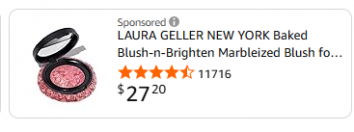
Sponsored Product Example on Amazon
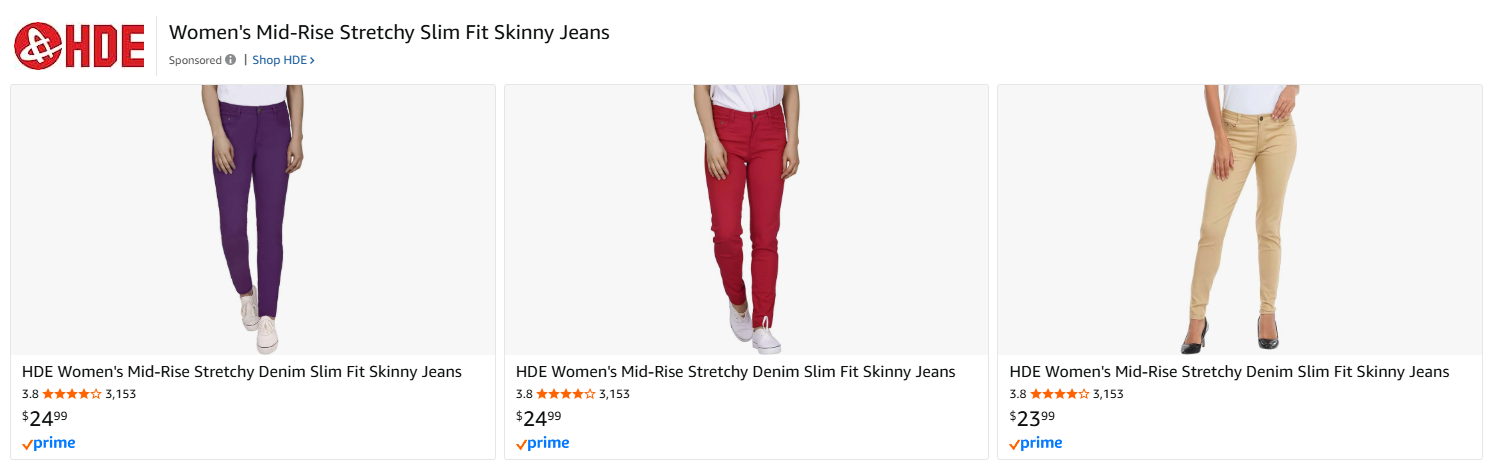
- Sponsored Brands: These ads feature your logo, custom headline, and multiple products, appearing at the top of search results where visibility is highest. You can even use image or video versions to tell your brand story and guide shoppers to your Amazon Store.
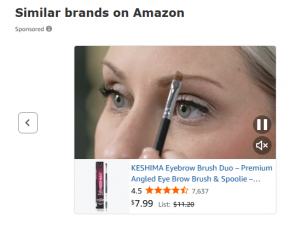
- Sponsored Display: Theseads help you reconnect with shoppers, both on and off Amazon. Using Amazon’s audience data, these ads show your products to people who’ve viewed your listings or similar ones, keeping your brand top of mind as they browse other sites or apps.
- Competition & Category
More sellers and popular categories (like electronics or beauty) drive up bids. Niche categories such as home décor or books usually have lower CPCs.
- Bidding Strategy & Keywords
Amazon uses an auction model: higher bids improve visibility but raise costs. Competitive or broad keywords (e.g., “headphones”) are pricier, while long-tail terms (e.g., “wireless gym headphones”) are usually cheaper and more targeted.
- Relevance & Targeting
Ads with strong relevance, clear copy, and accurate targeting perform better and often cost less. Broad targeting reaches more people but may waste clicks; narrow targeting keeps costs efficient.
- Demand & Seasonality
Expect higher CPCs during peak shopping periods like Prime Day or the holidays due to increased competition.
What is the difference between ACoS vs TACoS vs ROAS?
ACoS, TACoS, and ROAS measure ad performance differently: ACoS shows how much you spend per dollar of ad revenue, TACoS include total (organic and paid) sales for a bigger profitability picture, and ROAS reveals how much revenue you earn for every dollar spent on ads.
ACoS (Advertising Cost of Sales)
ACoS shows how much you spend on ads to make a dollar in sales, usually expressed as a percentage. For example, an ACoS of 10% means you spend $0.10 in ads for every $1 earned through those ads. The lower your ACoS, the more efficient your campaign is.
TACoS (Total Advertising Cost of Sales)
TACoS takes a wider view by factoring in all your sales, not just ad-driven ones. It’s a great way to gauge overall brand health. If your TACoS is dropping over time, it means your ads are helping boost organic sales too. On the other hand, a higher TACoS may indicate that your sales are too reliant on ads, meaning it is increasing costs without much return.
ROAS (Return on Ad Spend)
ROAS is essentially the reverse of ACoS, it shows how much you earn for every dollar spent on ads. For instance, a ROAS of 4x means you made $4 for every $1 spent. While ACoS is more Amazon-specific, ROAS is a universal marketing metric used across platforms.
Example Starter Budget
Let’s say you begin with a $20 daily budget, and your average CPC is $0.75. That means you can expect roughly 25-27 clicks per day ($20 ÷ $0.75).
If around 10% of those clicks convert into sales, you’ll make about 2–3 sales per day. This early data is extremely valuable, as it helps you see which keywords, bids, and products perform best so you can start optimizing with confidence.
What Is Audience Targeting in Amazon Ads (and Why It Matters)
If you’re new to Amazon Ads, audience targeting simply means deciding who should see your ads. Instead of showing your products to everyone, targeting helps your ads reach the shoppers most likely to buy, saving money and improving results.
Amazon’s targeting tools use shopper data such as browsing history, search intent, and purchase behavior to show your ads to people who are genuinely interested in your type of product.
Why Targeting Matters In Amazon Advertising Management
Amazon is a busy marketplace with thousands of similar products. Without targeting, your ads might appear to people who aren’t interested, leading to wasted clicks and higher costs.
Good targeting ensures your ads appear in front of the right shoppers, those actively searching for or browsing products like yours.
Effective Targeting Helps You:
- Increase relevance: Your ads show up for shoppers genuinely interested in what you sell.
- Use your budget wisely: You only pay for clicks from potential buyers.
- Match your goals: Whether you’re attracting new customers or re-engaging past visitors, targeting helps you focus your efforts.
Main Targeting Options on Amazon
Keyword Targeting
Your ads appear when shoppers search for specific words or phrases. For example, if you sell yoga mats and target “non-slip yoga mat,” your ad can appear when someone searches for that term.
- Broad match: Reaches a wide range of related searches (e.g., “yoga accessories”).
- Phrase match: Targets searches that include your phrase (e.g., “non-slip yoga mat for home”).
- Exact match: Targets only your chosen keyword, ideal for precision.
Product Targeting (ASIN or Category)
Show your ad on specific product pages or within product categories.
For example, if you sell phone cases, you could target popular phone model listings or competitor ASINs.
Audience Targeting (Behavioral or Contextual)
Used mostly with Sponsored Display Ads, this lets you reach shoppers based on their browsing or purchasing behavior, such as viewing your product but not buying.
Perfect for retargeting and reminding potential customers to come back and purchase.
Which Sponsored Ad Is Right for You?
Sponsored Products
- Best for: Driving direct product sales.
- Placement: Search results and product detail pages.
- Visual Style: Looks like a standard listing with a “Sponsored” label.
Sponsored Brands
- Best for: Building brand recognition.
- Placement: Top of search results and brand store pages.
- Visual Style: Features your brand logo, headline, and multiple products.
Sponsored Display
- Best for: Retargeting shoppers on and off Amazon.
- Placement: Product detail pages, Amazon homepage, and external sites
- Visual Style: Features a product image, short headline, brand name, and a clear call-to-action button (like “Shop Now” or “Learn More”).
Amazon Ads Comparison Table
| Category | Sponsored Products | Sponsored Brands | Sponsored Display |
|---|---|---|---|
| Pricing Model | Cost-Per-Click (CPC) | Cost-Per-Click (CPC) | Cost-Per-Click (CPC) or Cost-Per-Thousand Viewable Impressions (vCPM) |
| Targeting Type | Keyword & Product Targeting | Keyword & Product Targeting | Contextual & Audience Targeting |
| Ad Placement | Search results, product pages | Top of search, brand store | Product pages, homepage, off-Amazon |
| Key Visual Traits | Regular listing with “Sponsored” tag | Brand logo, headline, multiple products | Product image, “Shop Now” button |
| Advertiser Type | Professional Seller Account holders on Amazon | Brand-registered sellers on Amazon | Sellers & vendors enrolled in Amazon’s brand registry, and businesses that don’t sell on Amazon |
| Key Advantage | Easy to launch and scale | Boosts brand visibility | Retargets and expands reach |
| Key Difference | Product-level targeting | Brand-focused creative | Audience-based targeting |
Each Amazon ad type plays a unique role in the buyer journey: use Sponsored Products to drive conversions, Sponsored Brands to boost discovery, and Sponsored Display to re-engage shoppers through retargeting.
How to Set Up an Amazon PPC Campaign
Setting up your first Amazon PPC campaign is easier than it sounds. You’ll create and manage campaigns inside Amazon Seller Central under Campaign Manager.
Follow these 5 simple steps:
- Choose your campaign type: Start with automatic targeting for simplicity or manual for control.
- Select your products: Focus on top-rated or best-selling items.
- Pick your keywords: Use Amazon’s suggestions or keyword research tools.
- Set bids and budgets: Begin small and scale up as performance improves.
- Launch and monitor: Review your results regularly to see what’s working.
How to Optimize Your Amazon Ads For Better ROI
1. Keep an Eye on Your Numbers.
- Clicks: Are people clicking on your ads?
- Sales: Are those clicks turning into purchases?
- Spend vs. Return: Are you earning more than you’re spending?
2. Target the Right Search Terms.
- Look for specific, detailed search terms that match what your product actually offers.
- Remove or “block” unrelated keywords so your ads don’t appear for the wrong searches.
- Try different match types (Exact or Phrase), so your ad shows only when it’s relevant.
3. Fine-Tune Your Bids.
- Raise bids on ads or keywords that make money.
- Lower bids where you’re spending but not selling.
- Test different placements, for example, showing up on product pages might bring cheaper clicks than competing for the top of search.
4. Polish Your Product Page.
- Use clear, high-quality photos that show your product from multiple angles.
- Write a simple, keyword-rich title that explains what it is right away.
- Keep your price competitive and highlight reviews if you have them.
5. Update, Test, and Repeat.
Every two weeks:
- Pause ads that cost too much and don’t sell.
- Lower bids on weak keywords and raise bids on strong ones.
- Add new negative keywords as you learn what’s not working.
- Try new ad formats like Sponsored Brands or Display ads to reach more shoppers.
Tools and Software to Simplify Amazon PPC Management
Managing multiple campaigns can be time-consuming. That’s why many sellers use Amazon PPC software to automate and optimize their ads.
Benefits of Using PPC Tools
- Save hours on manual adjustments
- Discover high-performing keywords
- Automatically adjust bids based on performance
Key Features to Look For
- Keyword tracking and discovery
- Bid automation
- Performance dashboards
Modern tools now include AI-powered optimization, helping you make smarter decisions faster even when you’re not actively managing campaigns.
Should You Hire an Amazon PPC Expert or Use PPC Software?
Choosing between an expert and software depends on your budget, goals, and how involved you want to be.
- PPC Expert or Agency: Ideal for growing brands that want hands-off, professional management. Experts handle setup, bidding, and optimization but charge more (often 10-20% of ad spend) and offer less direct control.
- PPC Software: Better for sellers who want automation with flexibility. It’s more affordable and gives real-time insights but requires some learning and regular monitoring.
Common Issues and Quick Fixes for Amazon PPC Ads
Amazon Advertising Management Common Problems
- Ads not showing: Often due to limited budgets or campaign structure issues.
- Bids too low: Low bids in competitive categories result in poor visibility.
- Inactive or out-of-stock listings: Even great ads can’t convert if the product isn’t available.
- Poor campaign structure: Mixing unrelated products or overly broad keywords reduces efficiency.
- Over-reliance on automatic campaigns: Without manual control, budgets can be wasted.
- Expecting instant results: Amazon’s ad algorithm often takes several days to adjust after changes.
Quick Fixes
- Increase your daily budget or pacing: Prevent your ads from stopping early in the day.
- Raise bids for proven, high-intent keywords: Compete effectively for quality traffic.
- Keep listings active and optimized: Ensure products are in stock and have strong images and copy.
- Refine campaign structure: Group products logically, add negative keywords to block irrelevant clicks, transition from automatic to manual campaigns as data grows.
Conclusion
Amazon Advertising can feel complicated at first, but once you learn the basics of ad types, targeting, and bidding, it becomes a powerful way to grow your sales and brand on the marketplace. Start small, test different approaches, and use your results to make improvements. With time and steady effort, Amazon Ads can become a dependable way to increase traffic, boost visibility, and build long-term success for your business.

The post Amazon Advertising Management: A Beginner’s Guide appeared first on BQool Blog.

